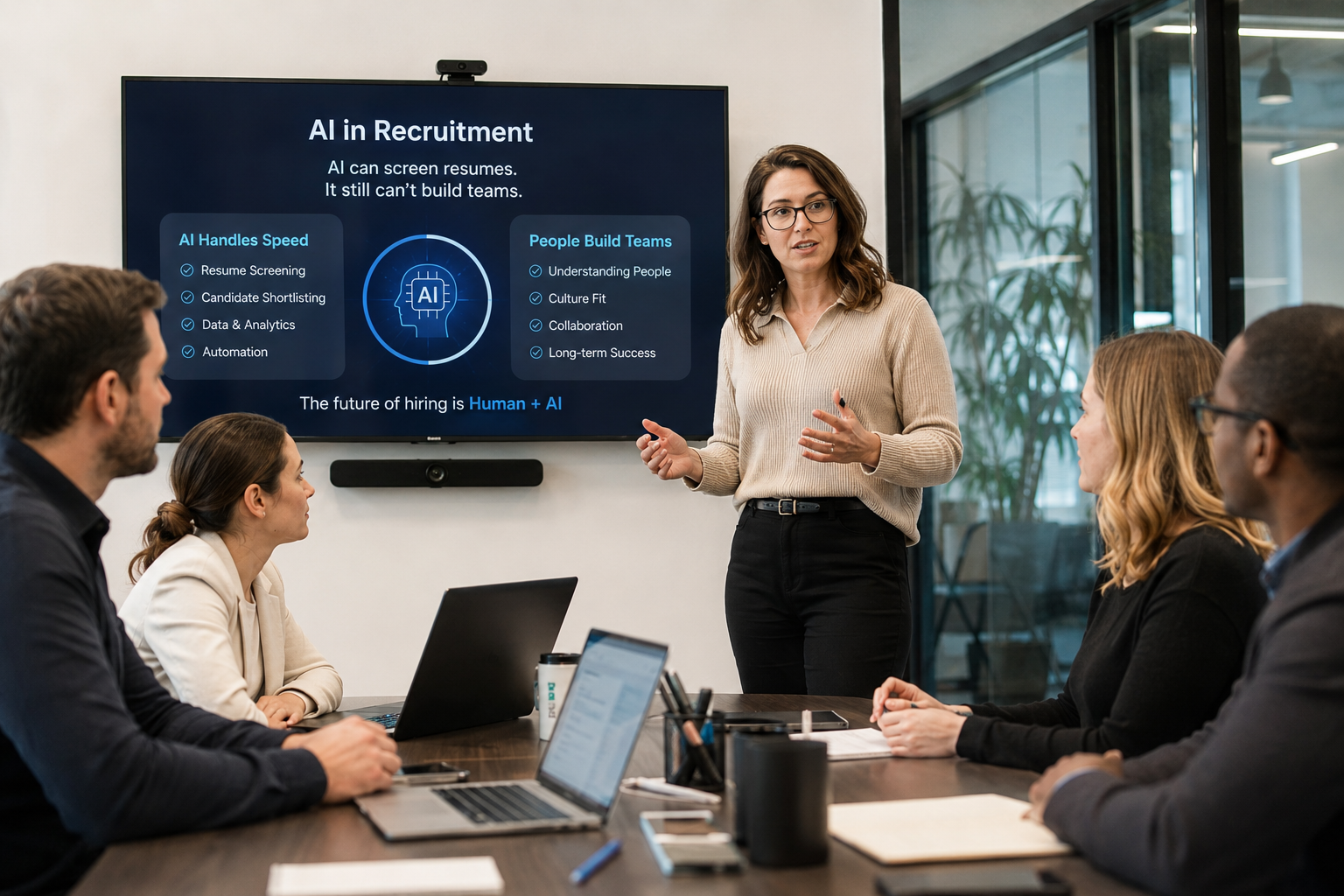
AI in recruitment is rapidly transforming how companies hire, screen, and evaluate talent.
From automated resume screening to predictive hiring analytics, companies are investing heavily in AI-driven hiring tools to accelerate recruitment and improve efficiency. In fact, a recent ManpowerGroup survey found that 82% of organizations in Singapore are already using AI in hiring, onboarding, or workforce training.
But while AI is changing how companies hire, many organizations are learning an important lesson:
Speed does not automatically create better hiring outcomes.
Because hiring isn’t just about finding keywords on a resume. It’s about identifying adaptability, collaboration, leadership potential, and long-term fit qualities that algorithms still struggle to fully evaluate.
The Rise of AI Recruitment
There’s no question AI is becoming central to modern recruitment strategies. According to the Foundit Insights Tracker, AI-led hiring helped drive a 15% increase in recruitment activity in 2025, with AI-related roles continuing to grow rapidly across industries. At the same time, employers are facing mounting pressure to:- hire faster
- reduce recruitment costs
- manage larger applicant volumes
- close skill gaps efficiently
- automate resume filtering
- rank candidates faster
- identify skills patterns
- streamline interview scheduling
- improve sourcing efficiency
The Problem With Over-Automated Hiring
As more companies rely heavily on automated systems, a new challenge is emerging: hiring friction. Recent reporting has highlighted how rigid AI-driven screening systems can unintentionally filter out qualified candidates because of resume gaps, unconventional career paths, or missing keywords. This becomes especially problematic in today’s labor market, where career paths are no longer linear. Employers are increasingly hiring:- career changers
- project-based professionals
- contract talent
- returners
- nontraditional candidates
- skills-first applicants
Hiring Today Is About Skills Not Just Credentials
The workforce is shifting toward skills-based hiring faster than many organizations expected. Research shows employers are increasingly prioritizing competencies and adaptability over formal qualifications alone. Indeed’s hiring research found that:- 42% of hiring managers struggle to find candidates with the right skills
- skills-first hiring improves candidate quality
- organizations are redesigning hiring around capabilities instead of resumes alone
- leadership experience
- communication strengths
- cross-functional thinking
- adaptability
- industry insight
- strong learning agility
Human Judgment Still Matters
The most effective hiring strategies aren’t “AI-only.” They’re human-guided. Emerging research on AI-assisted recruitment suggests that combining AI efficiency with human oversight produces fairer and more effective hiring outcomes than relying on algorithms alone. That hybrid approach matters because people evaluate nuance better than systems do. Human recruiters can assess:- culture alignment
- growth potential
- emotional intelligence
- communication style
- adaptability under change
- leadership capability
The Future of Recruitment Is Human + AI
AI will continue to reshape hiring. But the companies that win won’t be the ones that automate everything. They’ll be the organizations that combine:- intelligent technology
- strategic workforce planning
- relationship-driven recruiting
- skills-based hiring
- human-centered decision making