Introduction
For many organizations, subscribing to a suite of job boards has been a baseline recruitment strategy: post – wait for applications – sort resumes. But in today’s hyper-competitive talent market, that strategy alone increasingly under-delivers. While job boards give visibility, they often flood recruiters with high volumes of applicants many of whom may not truly match the role.
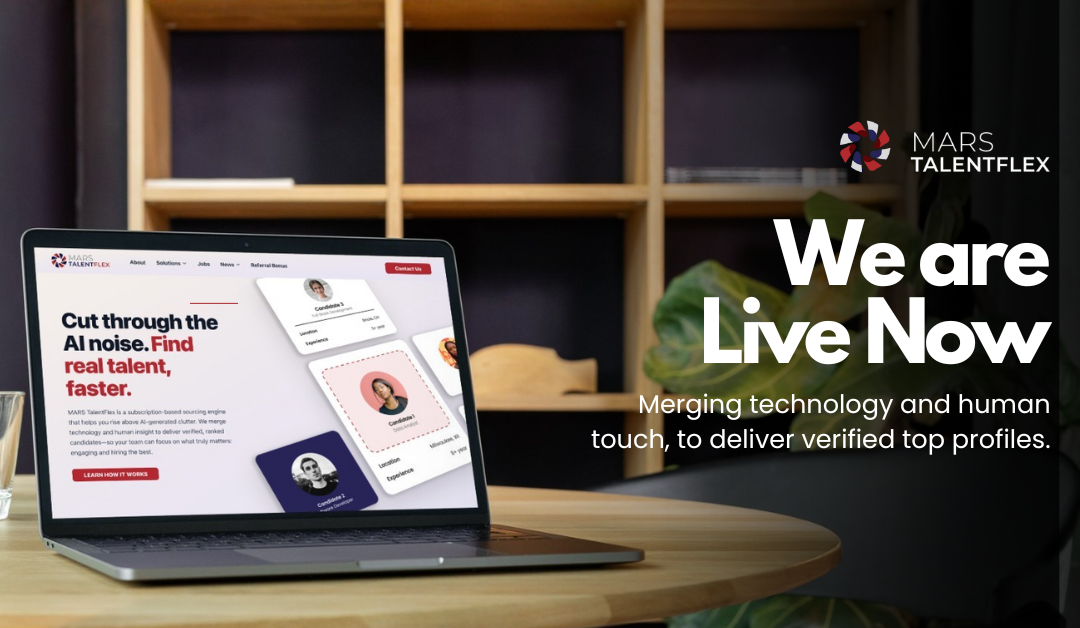
Enter AI-driven platforms such as MARS TalentFlex. By leveraging intelligent screening, matching, and ranking, they replace broad-reach tactics with precision-hiring. This blog will compare traditional job-board reliance with the AI-first approach, draw on data to highlight why the shift matters, and show why MARS TalentFlex offers a better path forward.
1. The Limitations of Job Board Subscriptions
Broad Reach ≠ High Relevance
Job boards do provide access to large applicant pools and have a role in the ecosystem. But the challenge lies in filtering: many posted roles attract hundreds or thousands of responses. Without strong screening, recruitment teams can get overwhelmed. Moreover, job boards are inherently reactive waiting for applicants rather than proactively sourcing the right match.
Cost and Time Inefficiencies
Each job-board post has a cost (either per post or subscription). Multiply that across roles, boards, and campaigns, and hiring spend climbs. Meanwhile, manual review of large applicant volumes drags time to hire upwards, risking the loss of quality candidates. The average hiring process still takes weeks rather than days.
Passive Talent is Often Missed
Job boards primarily attract active job-seekers. But the best hires often come from passive talent – those not actively looking but open to the right opportunity. Job boards are less effective at reaching this segment, limiting the talent pipeline.
2. Why AI Matters in Modern Recruitment
Widespread Adoption and Tangible Gains
According to the “AI in Hiring 2025” survey by Insight Global, 99% of hiring managers now use AI in the hiring process, and 98% report significant improvements in hiring efficiency. Another source notes that 87% of companies use AI-driven recruitment tools, with benefits such as time savings, cost reduction, and improved sourcing.
Better Matching, Faster Screening
AI can do more than simply filter by keywords. AI’s ability to analyze skills, experience, fit, and context elevates matching quality. The World Economic Forum reports that candidates who went through AI-led interviews progressed at a 53% success rate compared to 28.6% via traditional resume-screening.
Cost Savings and Efficiency Gains
The Society for Human Resource Management (SHRM) reports that 89% of HR professionals whose organizations use AI for recruiting say it saves time or increases efficiency. About 36% say it reduces recruitment, interviewing, or hiring costs.
Scalability and Agility
As hiring demands fluctuate, AI platforms scale quickly without needing massive manual review teams. They allow recruiters to manage volume while keeping focus on high-value candidates.
3. Why MARS TalentFlex Trumps Job Boards
Precision Over Volume
Rather than simply posting to multiple boards and waiting, MARS TalentFlex leverages proprietary AI to scan, rank, and deliver the top 5–8 matched profiles per job request. This replaces hundreds of resumes with a curated shortlist.
Faster Time-to-Hire, Better Quality
Thanks to AI screening and matching, recruiters spend less time filtering and more time engaging qualified candidates. That means faster decision-making, reduced candidate drop-off, and a better employer brand as responsiveness improves.
Cost-Effective and Predictable
Rather than paying for multiple job board subscriptions (which may or may not deliver good candidates), MARS TalentFlex offers a model focused on outcomes: matched talent delivered. This means better ROI on hiring spend.
Access to Passive + Active Talent
While job boards skew toward active applicants, MARS TalentFlex’s AI can surface candidates who might not be actively applying but whose profiles match well. This opens up a richer talent pool and improves competitive advantage
Data-Driven Insights
With each role processed, the platform accumulates data on match-rates, time-to-hire, candidate success. These insights enable continuous improvement of hiring strategy = something traditional job board postings rarely deliver.
4. How to Transition from Job Boards to AI Recruitment
Step 1: Audit Your Current Spend and Outcomes
List all job-board subscriptions, cost per role, number of hires, time-to-hire.
Step 2: Map Where Volume vs Relevance is Lacking
Are you getting many applications but few fits?
Step 3: Pilot an AI-Driven Platform Like MARS TalentFlex
Submit a job, compare outcomes: number of candidates, time, quality.
Step 4: Measure and Optimize
Track match-to-hire ratio, retention of hires, hiring cost.
Step 5: Reallocate Budget
Gradually reduce subscriptions where ROI is low; invest more in AI-driven matching and curated shortlists.